CinemaEditor Sneak Peek

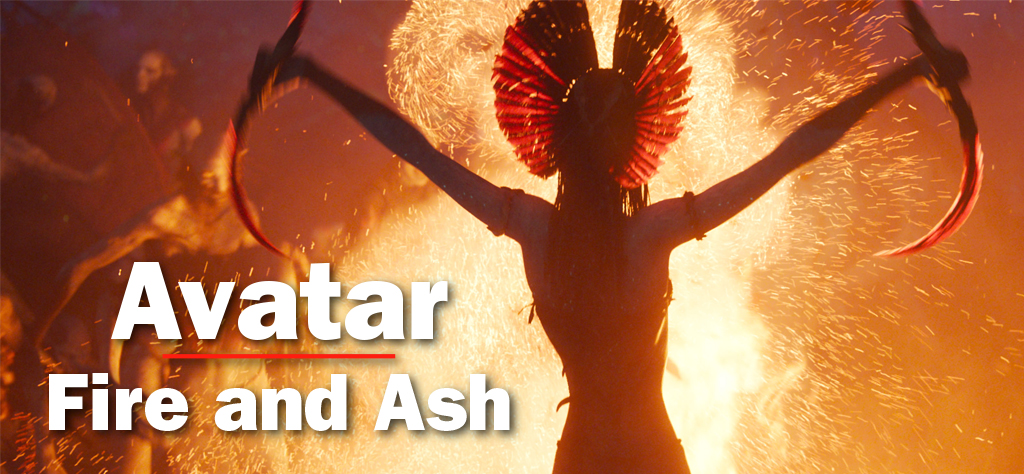
The editing team describes the multi-year journey to create the epic film. “We wouldn’t leave the virtual camera stage until we’d explored multiple patterns,” says James Cameron, ACE.
by Carolyn Giardina
Editing tools and techniques continually progress in service of storytelling, but none have broken the mold more than the pioneering workflow that has evolved over roughly two decades to craft the Avatar saga from Lightstorm Entertainment and 20th Century Studios.
In Avatar: Fire and Ash, which opened Dec. 19, audiences were reunited with the Sully family as they face the new Ash clan led by a fiery new villain, Varang, played brilliantly by Oona Chaplin.
To tell this epic story in such an ambitious way, it took the combined editing talents of Stephen Rivkin, ACE; Nicolas de Toth, ACE; Jason Gaudio; the late John Refoua, ACE; and director James Cameron, ACE, who also co-wrote the screenplay.
The Workflow
The first thing to understand about their fluid workflow is that it gives the editors limitless choices in crafting a story. This starts by uncoupling performance from cinematography. As a result, the movie is effectively edited twice.
It starts with the actors’ performance capture at Manhattan Beach Studios, from which a performance edit is created using reference video from the capture. “We’re not doing shots for the movie,” Cameron explains in a conversation with CinemaEditor and the Fire and Ash editing team. “We’re doing the performance [solely] to get the best takes and put them into the scene.”
The next step is virtual camera, during which Cameron and his team take the performances from the first edit, play them back on the virtual stage with the actors no longer present, and figure out the shots. “Now we have shots for the first time; we have to edit them into an actual sequence,” Cameron explains, noting that this is the step that more closely resembles traditional live action filmmaking. “You’re getting shots. You get a master shot, you get close-ups, you get two shots.”
Rivkin notes that the process has evolved “but in the early days of Avatar, the learning curve was steep, and we were having to make a lot of things up as we went along.”
He described one such example, a process through which they add background characters to a cut performance edit, when large crowds are needed. “Sometimes we’d have to do multiple passes of background action, because we’re limited by the number of characters that could be captured at one time.
“It’s much like an overdub that you would do in audio recording, keeping crowd reactions in sync with the principal performance edit,” he continues, relating that there’s a troupe of actors and stunt performers that have worked on all three Avatar movies.
Assembling the Team
Cameron (already an Oscar winner in editing for his 1997 film Titanic) remembers that when the workflow began to develop for 2009’s Avatar, it was apparent that editorial was not a solo job. The first editor to join him was Rivkin (Pirates of the Caribbean), and the pair have worked together ever since.
The next veteran editor to join the team was Refoua (with whom Cameron had worked on his Dark Angel series and Ghosts of the Abyss documentary). “We were defining workflows and developing methodologies that actually have carried on through all three films,” Rivkin remembers of that time. Cameron adds that he expected Refoua to take six months to get up to speed on the workflow, but Refoua did this in half of that time – in fact, Cameron commends each of the editors for the way in which they came in and mastered these new methods.
In a 2022 interview with Steve Hullfish, ACE (Art of the Cut, Dec. 29, 2022), Refoua described how the workflow resulted in a unique way of thinking. In the performance edit, “you’ve got to imagine what the scene is going to be without having shots, which is the opposite of what we do. We always have a shot. … But we don’t have that. We do have a performance that we think would work best.”
Refoua earned an Oscar nomination for Avatar alongside Cameron and Rivkin, and remained on the editorial team until his death in May 2023 from cancer complications. Even while ill, Refoua remained involved. “We made sure that we incorporated him into all of the creative discussions,” Cameron remembers. “He was pretty active right until the end of his life.”
The Way of Water and Fire and Ash were made concurrently, meaning that the workload was even greater on these movies. Oscar-winner David Brenner, ACE (Born on the Fourth of July) was the next editor to join the team. “He dove into the deep end, literally and figuratively, because he tackled some of the early underwater capture in Way of Water,” Cameron remembers of Brenner, who died in 2022 and has a posthumous editing credit on that film, shared with Cameron, Rivkin, and Refoua. (Brenner has an additional editor credit on Fire and Ash.)
After Brenner’s passing, Nicolas de Toth joined the production to learn the Avatar workflow and prepare for his work as an editor on Fire and Ash. Jason Gaudio was originally hired on 2009’s Avatar as Cameron’s first assistant, then served as an additional editor on Way of Water, and was promoted to editor on Fire and Ash.
Gaudio relates that for Avatar, editorial moved between Los Angeles and Wellington, but for the following two films, they maintained cutting rooms in both locations, with two distinct teams. “On Fire and Ash we had two first assistants, Ben Murphy in Los Angeles and Elizabeth Denekamp in New Zealand. And they each had teams with capture stages, which were also used to create virtual shots, and New Zealand had live action stages as well.
“Once we had that established, we had an army of assistants,” he continues. “We’re in preproduction, production and post-production all simultaneously, so our assistant team needed to be able to process all those dailies at the same time.”
Virtual Camera
As previously mentioned, performance capture was followed by virtual camera, with editorial actively involved in the process. Noting that either Rivkin or de Toth would be on stage cutting, Cameron relates, “The rough assemblies would be available for me right away in the cutting room. I’d typically do camera for a few days a week, and then I’d edit usually Friday, Saturday, Sunday, because I could kind of just edit at my own pace. It became this kind of amazing creative feedback loop.”
De Toth remembers virtual camera days with Cameron as among his favorite parts of the process. “It was a great opportunity to work hand in hand with him, watch him modify camera angles, performances, settings, and hear his thought process, giving me great insight as to how we might want the scene edited,” he says.
Cameron lightheartedly describes why this part of the process might resonate with editors: “I know every picture editor in the world at some point is saying, ‘I just wish the dumbass director had got a cutaway or an insert.’ Steve would be editing 50 feet away from where I’m working, evolving the scene. And he’d just say, ‘You know, if you gave me this, I could do this pattern.’ And I’d say, ‘Coming up.’ … We wouldn’t leave the virtual camera stage until we’d explored multiple patterns.”
He adds this required discipline and creative thinking. “When you have infinite choices, you have to be very disciplined about what serves the narrative at any moment,” he says. “So there’s an awful lot of creative discussion. I’m thinking like a director, but I’m also thinking like an editor. Steve’s thinking like an editor, he’s also thinking like a director.”
“Most Complicated Workflow”
Also requiring invention was how to integrate the live action character Spider (Jack Champion) with the Na’vi on Pandora.
To do this, Champion would wear a performance capture suit and play his role alongside the other actors for reference. Once there was an edit of the scene, they would shoot the actor’s live action performance and integrate the live action actor into each shot. “That’s our most complicated workflow, when we’re putting CG characters into live action and live action into CG settings,” Cameron says, noting that Champion’s character was critical to get right, as he was the glue that ties all the different stories together.”
In Los Angeles, VFX Oscar winner and Executive Producer Richard Baneham worked creating initial rough camera passes, with Gaudio assembling the material in a preliminary assembly. “Every night, I would send these rough first assemblies to Jim, so he could get an idea of how the scene is starting to work,” Gaudio says.
It worked better than expected. “Richie would go out and experiment in the scene with virtual camera shots and get them all working, get them lit, and then hand that stuff over to me to do kind of a final pass,” Cameron relates, “but what emerged out of that was that it became a proper second unit where he was actually generating virtual shots that could be used in the final edit.”
Finishing
Continued tech innovation included new software to organize the process. Editorial also had help from Avid. Remembers Gaudio, “Avid modified their software to give us, I think it was up to 99 tracks. We would use, sometimes, all the way up to 70. We’d have a track that we would view, but we would carry all the reference so at any time, we could look at any character and know exactly what they were doing, exactly what their sync was, because often we’re using multiple takes for any given shot.”
By the final year of production they were generally editing the shots created in virtual camera, but occasionally they went back to performance capture.
For example, late in Fire and Ash production Cameron wrote the scene during which Jake brings the clans together to take a stand against the human forces, a new way to effectively enter the third act. “We just got the band back together, we got the actors back. … We captured that scene, and then we started editing around that.”
Similarly, the moving portion of the film’s conclusion during which Spider is accepted by the ancestors came together late in the process. “I wrote that very late in the day, and then Steve added to that the idea that the other characters would be floating underwater, and they’d be watching and they’d be smiling. … This is just about us iterating and trying to figure out how to tell the story the best possible way.”
When the editors do the final cut of the movie, they’re still working with images at a more proxy level (called template), before they were sent to Weta or ILM for VFX and final rendering. Rivkin explains that at this point, they “lock the scene to the frame and the lighting and all the digital assets. Everything is encompassed in the template, so that when it goes to [VFX], it is shot for shot what’s in the movie.”
“Our turnovers to Weta are very complete blueprints,” Cameron continues. “It’s also exactly the camera move that we want, exactly the relationship between the character and the camera, even down to how we build our stereo into that.” In approving final shots, Cameron is able to refer back to these templates and original performance reference for such details.
Camaraderie and collaboration were key themes for the editing team, who also remembered fondly Refoua and Brenner, as well as Cameron’s longtime producing partner, Jon Landau, who died in 2024 after a cancer battle.
“It’s something that Jon Landau created, this sense of family and team spirit, which is why we like to make these films,” Cameron reflects. “If I come back and do another Avatar film, it’s not going to be because I feel a compelling need to do the story as much as we just like working together.”
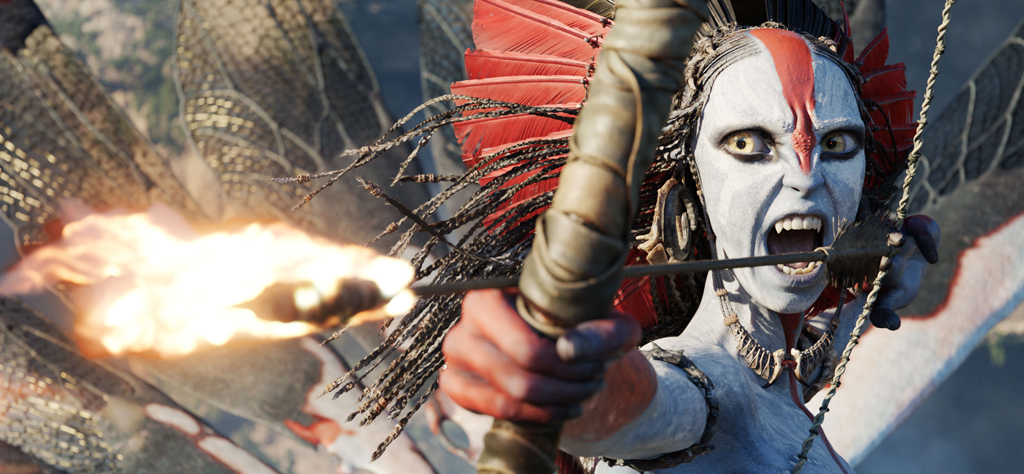
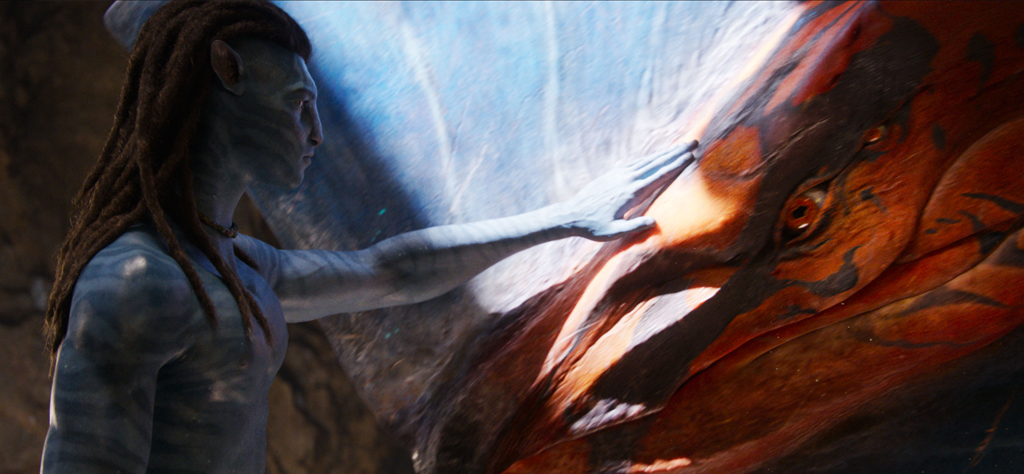
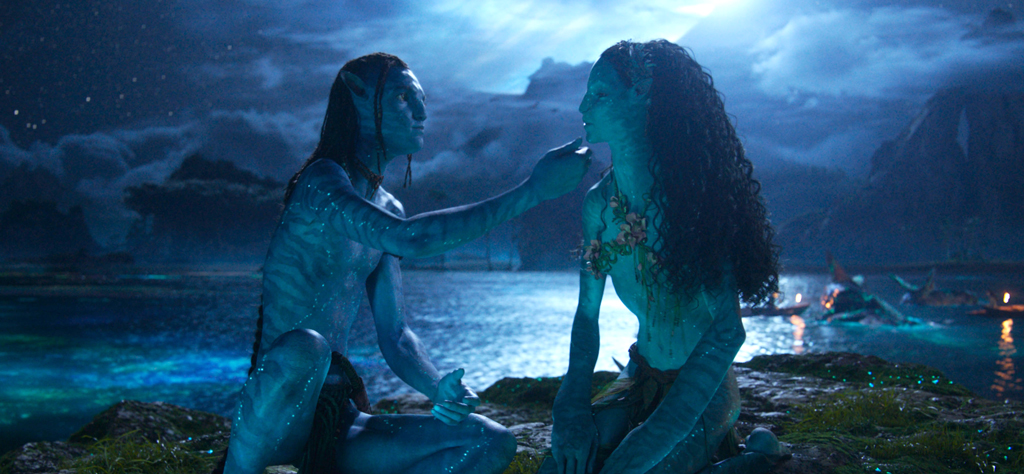
Photos (from top): Varang (Oona Chaplin): Oona Chaplin as Varang; Jake Sully (Sam Worthington); (L-R) Lo’ak (Britain Dalton) and Tsireya (Bailey Bass).
Photos courtesy of 20th Century Studios. © 2025 20th Century Studios. All Rights Reserved.
"The Essence of Cinema is EDITING"