
CinemaEditor MAGAZINE

98th Academy Awards: ‘One Battle After Another’ Editor Andy Jurgensen Wins Oscar; Creative Collaborators Celebrated
by Carolyn Giardina
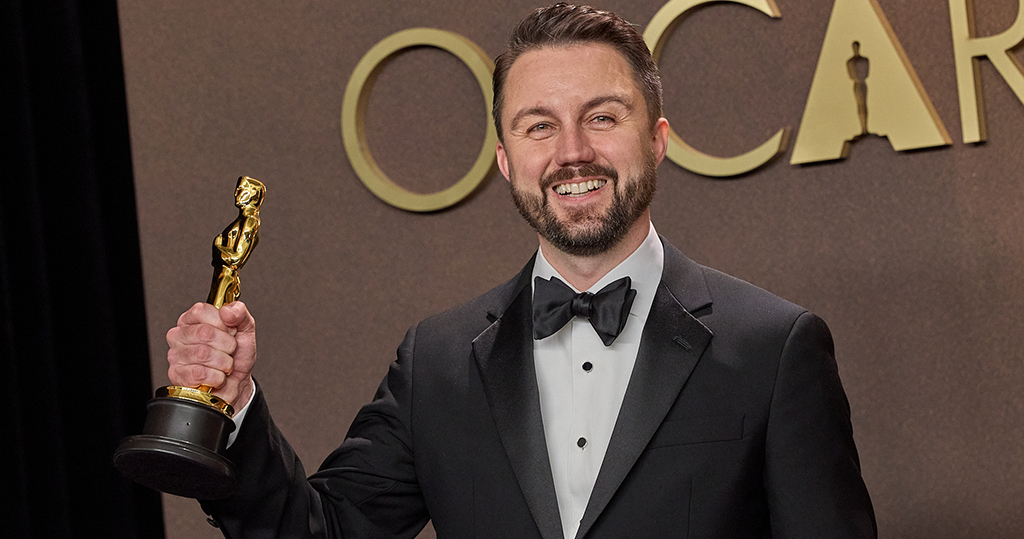
Andy Jurgensen won the Oscar in film editing for Paul Thomas Anderson’s One Battle After Another, which earned a total of six Academy Awards on Sunday, including best picture. Multi-hyphenate Anderson claimed three trophies, for best picture, director, and adapted screenplay.
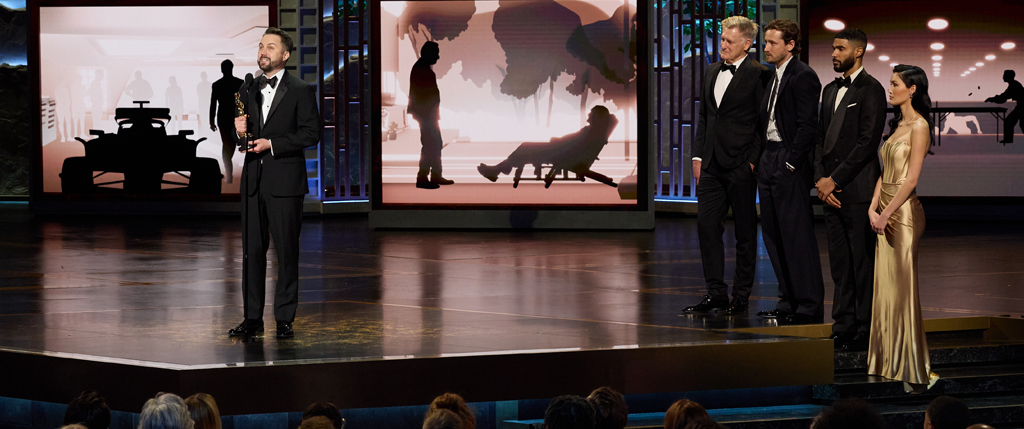
Accepting the award on stage from presenters Bill Pullman and Lewis Pullman, Jurgensen gave a “special thank you to my editorial crew, who worked their butts off behind the scenes. You guys are amazing.” He went on to thank Anderson for “taking me on this journey and our collaboration. Thank you to the wonderful cast and crew. Love to my parents and my sisters who are up in the balcony somewhere. And to my partner Bill, who brings so much joy to my life every day.”
He dedicated the award to his aunt, Barbara Hall, a film archivist for the Academy for over 25 years. “She loved her job and she loved showing me old movies and teaching me about film history and I miss her every day and I would not be up here if it wasn’t for her and my uncle Val.”
En route to the Oscars, first-time nominee Jurgensen won the ACE Eddie for a comedic feature and the BAFTA. Backstage, he talked about his journey with Anderson, which started with an assistant role, 12 years ago on Inherent Vice. “I guess I proved myself. He gave me little things to do, like little music videos, which then kind of evolved to this little documentary that he did. And he asked me to be the associate editor on Phantom Thread. So he just kind of kept me around.
“When you work with a director, you’re figuring out their sensibilities and your working relationship,” he continued. “He’s been such a mentor to me and taught me so much about storytelling. And I was thrilled when he asked me to cut Licorice Pizza and then asked me to do this. So, I’m very grateful to him.”
Anderson spoke on stage and backstage about Warner Bros.’ One Battle, which was adapted from the novel Vineland by Thomas Pynchon. Acknowledging Pynchon, Anderson said, “I wrote this movie for my kids to say sorry for the housekeeping mess that we left in this world we’re handing off to them. But also, with the encouragement that they will be the generation that hopefully brings us some common sense and decency.”
He also saluted his creative team, saying, “The thing that really gets me excited about making films is the people I collaborate with.” This was a theme celebrated through the ceremony.
Creative Collaborators
The work of editor Michael P. Shawver – who won the ACE Eddie for a dramatic feature and received his first Oscar nomination for Sinners – helped deliver four Academy Awards to the Warner film.
Sinners DP Autumn Durald Arkapaw, ASC became the first woman to win an Oscar in cinematography; writer/director Ryan Coogler took home an Oscar for original screenplay; Michael B. Jordan collected the award for best actor; and composer/songwriter Ludwig Göransson was honored for his score.
“I really want all the women in the room to stand up, because I feel like I don’t get here without you guys,” Arkapaw said on stage, as women in all disciplines stood for applause across the Dolby Theatre.
Among those she acknowledged were Coogler and friend Rachel Morrison, ASC (the first woman to be nominated for the cinematography Oscar, for Coogler’s Mudbound). Morrison had recommended Arkapaw to Coogler when she was unavailable for a film.
Backstage, Arkapaw was asked to reflect on her milestone. “A lot of little girls that look like me will sleep really well tonight because they’ll want to become cinematographers,” she said.
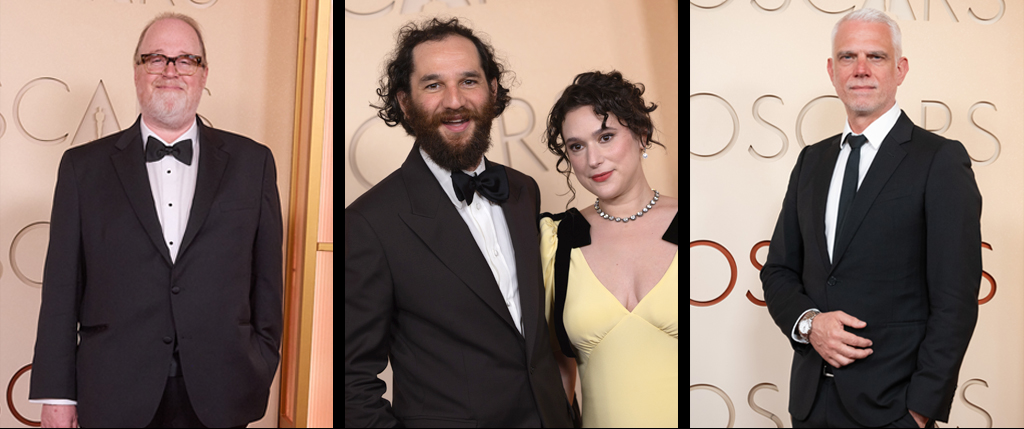
Joseph Kosinski’s Apple racing drama F1 – edited by Stephen Mirrione, ACE, who was Oscar and Eddie nominated for the movie (and is an Oscar winner for editing 2000’s Traffic) – collected the Academy Award for its sound. Oscars went to supervising sound editors Al Nelson and Gwendolyn Yates Whittle, production sound mixer Gareth John, and rerecording mixers Gary A. Rizzo and Juan Peralta. It was Rizzo’s third Oscar (he previously won for Inception and Dunkirk), the second for Nelson (Top Gun: Maverick) and Johns (Dune: Part Two), and the first for Whittle and Peralta. Said Nelson, “This film was made by filmmakers who embrace and celebrate theatrical experiences.”
Sentimental Value – whose editor Olivier Bugge Coutté was also a first time Oscar and Eddie nominee – collected the Academy Award for an international feature. “There’s 1,072 people on these credits, and I love them all, and I share this with them,” said director Joachim Trier as he accepted the statuette for the Neon release.
KPop Demon Hunters won Oscars for best animated feature and original song (“Golden”), two weeks after editor Nathan Schauf collected the ACE Eddie in the animated feature competition.
Accepting the animated feature Oscar were directors Maggie Kang and Chris Appelhans and producer Michelle L.M. Wong, who acknowledged Netflix, and Sony Pictures Animation, Imageworks and Music. Kang expressed how meaningful the award was to her as a Korean filmmaker and for Korea. “And I just hope to see more films, especially in animation, that focus on different cultures.”
Appelhans spoke to the next generation, saying, “Music and stories have this power to connect us as humans across cultures and borders. So, I just want to take a moment to say to all the young filmmakers, artists, musicians in all corners of the globe, tell your story. Sing in your voice. I promise you the world is waiting.”
Animation presenter Will Arnett received applause before leaving the stage, with a comment on the state of technology, though without using the term AI. He said, “Animation is more than a prompt. It’s an art form and it needs to be protected.”
Accepting the Best Actress Oscar, Hamnet’s Jessie Buckley thanked director Chloé Zhao, ACE and Zhao’s writing partner Maggie O’Farrell, who wrote the original book on which the film is based. “For Chloé and Maggie, to get to know this incandescent woman and journey to understand the capacity of a mother’s love is the greatest collision of my life,” Buckley said. Zhao additionally co-edited the movie with Affonso Gonçalves, ACE. The pair were Eddie-nominated for Hamnet.
Amy Madigan won the supporting actress Oscar for Weapons, whose editor Joe Murphy was also Eddie nominated. Asked about the rise in the horror genre backstage, Madigan said, “You just look at the great silent horror films that started our business. You still need a great writer. You need a great director. You need wonderful actors and crew.”
The VFX Oscar went to Avatar: Fire and Ash, which was edited by Stephen E. Rivkin, ACE; Nicolas de Toth, ACE; Jason Gaudio; the late John Refoua, ACE; and director James Cameron, ACE, who all worked closely with VFX. On stage, VFX supervisor Richie Baneham thanked the team and their families. “There’s 2200 artists. This is a massive, massive collaboration on the VFX side. We also overlap with everybody on the movie.” Weta VFX supervisor Eric Saindon remembered producer Jon Landau, saying he was the “heart and soul of the film.”
It was the sixth Oscar win for senior VFX supervisor Joe Letteri of lead VFX studio Weta FX; he’s the second most honored individual in the history of the category. It was the third win for Baneham and the second for Saindon and animation supervisor Daniel Barrett. With additional wins for 2009’s Avatar and 2022’s Avatar: The Way of Water, the franchise joined The Lord of the Rings as the only franchises to win three competitive Oscars in VFX. (The original Star Wars trilogy’s Empire Strikes Back and Return of the Jedi received non-competitive Special Achievement Awards.)
Additional Oscar winners included Guillermo de Toro’s Frankenstein – edited by Evan Schiff, ACE – which collected a trio of Oscars in the creative arts, for costume design (Kate Hawley); production design (production designer Tamara Deverell and set decorator Shane Vieau); and makeup and hairstyling (Mike Hill, Jordan Samuel and Cliona Furey). Said Hawley, “Guillermo is a big champion of the art and of craft.”
Also on Sunday, the inaugural Oscar for casting was presented to Cassandra Kulukundis for One Battle After Another. “I have to obviously thank the Academy for even adding this category, and for the casting directors that fought tirelessly to make it happen despite everything in their way. I dedicate this to you, and to the casting directors who never got a chance to get up here, who didn’t even get a chance to get their name on the movie,” she said. “And I have to thank all the crew. I’m in all of your departments, whether you like me or not. Whether it’s locations, who really hates me, stunts, production design, art directors, yeah, everyone. And editors, obviously. Thank you.”
Honored Docs
The Oscar for documentary short went to All The Empty Rooms, whose editors Erin Casper, ACE, Stephen Maing, and Jeremy Medoff recently received the inaugural ACE Eddie award for best edited short. The film documents the empty bedrooms of children lost to school shootings. Accepting the award, director Joshua Seftel thanked the short’s “incredibly compassionate filmmaking team.”
Joining the filmmakers on stage was Gloria Cazares, the mother of Jackie, one of the young children killed in a school shooting. She said, “Gun violence is now the number one cause of death in kids and teens. We believe that if the world could see their empty bedrooms, we’d be a different America.”
Mr. Nobody Against Putin collected the Oscar for a feature documentary, which was awarded to David Borenstein, Pavel Talankin, Helle Faber and Alžběta Karáskova. “Mr. Nobody Against Putin is about how you lose your country. And what we saw when working with this footage, it’s that you lose it through countless small little acts of complicity,” Borenstein warned. “We all face a moral choice. But luckily, even a nobody is more powerful than you think.”
In Memoriam
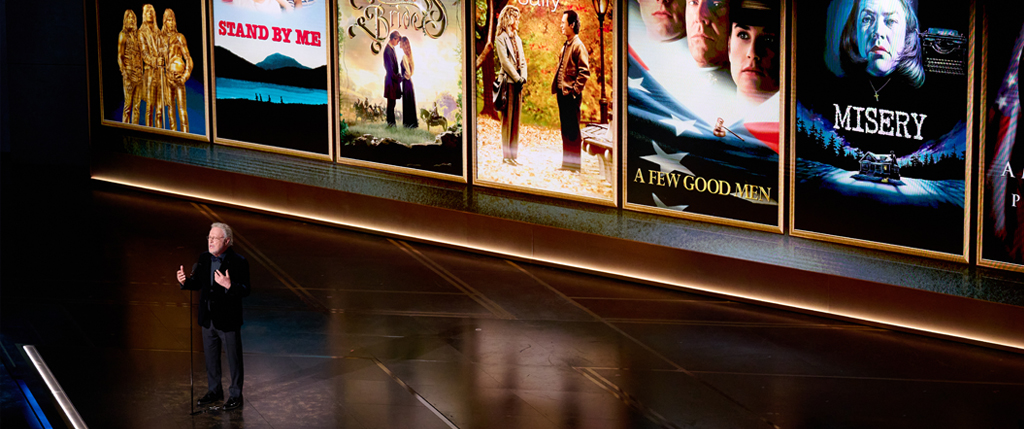
The show included a tribute to Rob Reiner, led by Billy Crystal. Two weeks earlier, Reiner’s longtime collaborator, editor Robert Leighton, remembered the filmmaker as he accepted the ACE Career Achievement Award.
Tributes to Diane Keaton, Catherine O’Hara and Robert Redford were also featured during this expanded In Memoriam segment.
ACE members remembered during the segment of the show included Don Zimmerman, ACE (Coming Home, The Prince of Tides) and William Steinkamp, ACE (Tootsie, Out of Africa).
Host Conan O’Brien kicked off his monologue quipping that he was “honored to be the last human to host the Academy Awards. Next year will be a Waymo in a tux.”
But he also took a moment to be serious, saying, “Everyone watching right now, around the world is all too aware that these are very chaotic, frightening times. It’s at moments like these that I believe that the Oscars are particularly resonant. Check it out, 31 countries across six continents are represented this evening, and every film we salute is the product of thousands of people speaking different languages, working hard to make something of beauty. We pay tribute tonight, not just to film, but to the ideals of global artistry, collaboration, patience, resilience, and that rarest of qualities today, optimism.”
Photos (from top): Andy Jurgensen poses backstage. Photo by Etienne Laurent; Andy Jurgensen accepts the Oscar® for Film Editing. Photo by Trae Patton; (L-R): Stephen Mirrione, ACE, Josh Safdie and Sara Rossein, Photos by Etienne Laurent; Olivier Bugge Coutté. Photo by Phil McCarten; Rob Reiner tribute with Billy Crystal. Photo by Wally Skalij. ©A.M.P.A.S.
"The Essence of Cinema is EDITING"