A Connect Committee Luncheon with Carol Littleton, ACE
– Story and Photos Courtesy of Sharidan Sotelo, ACE
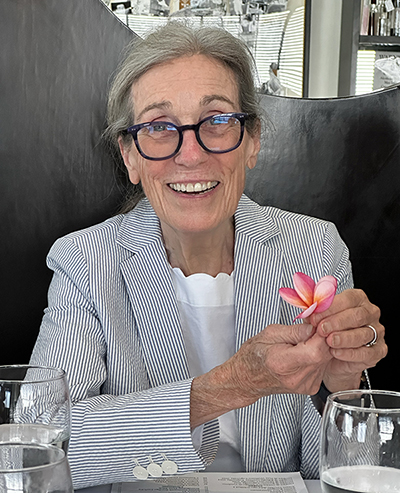
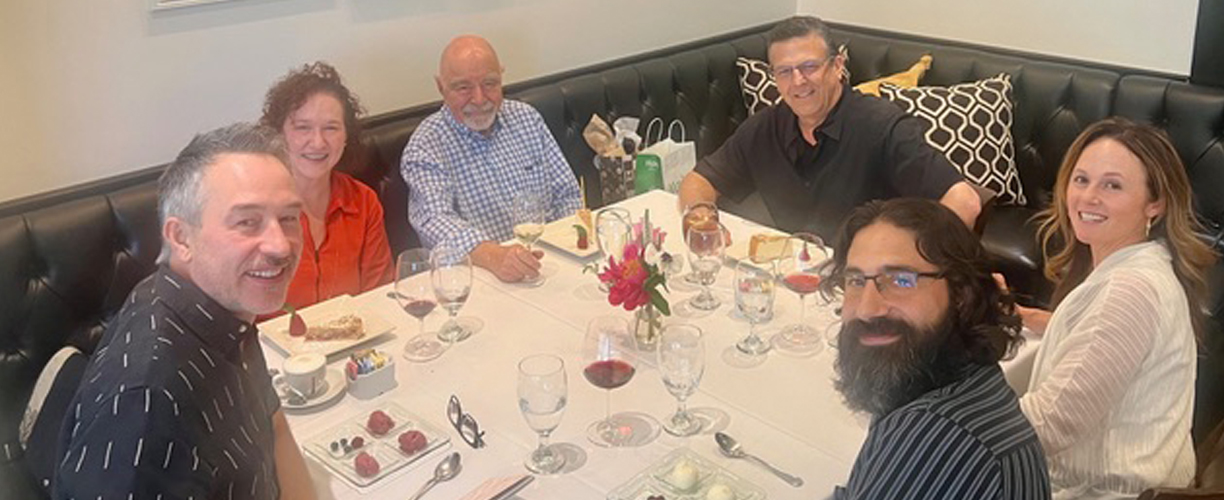
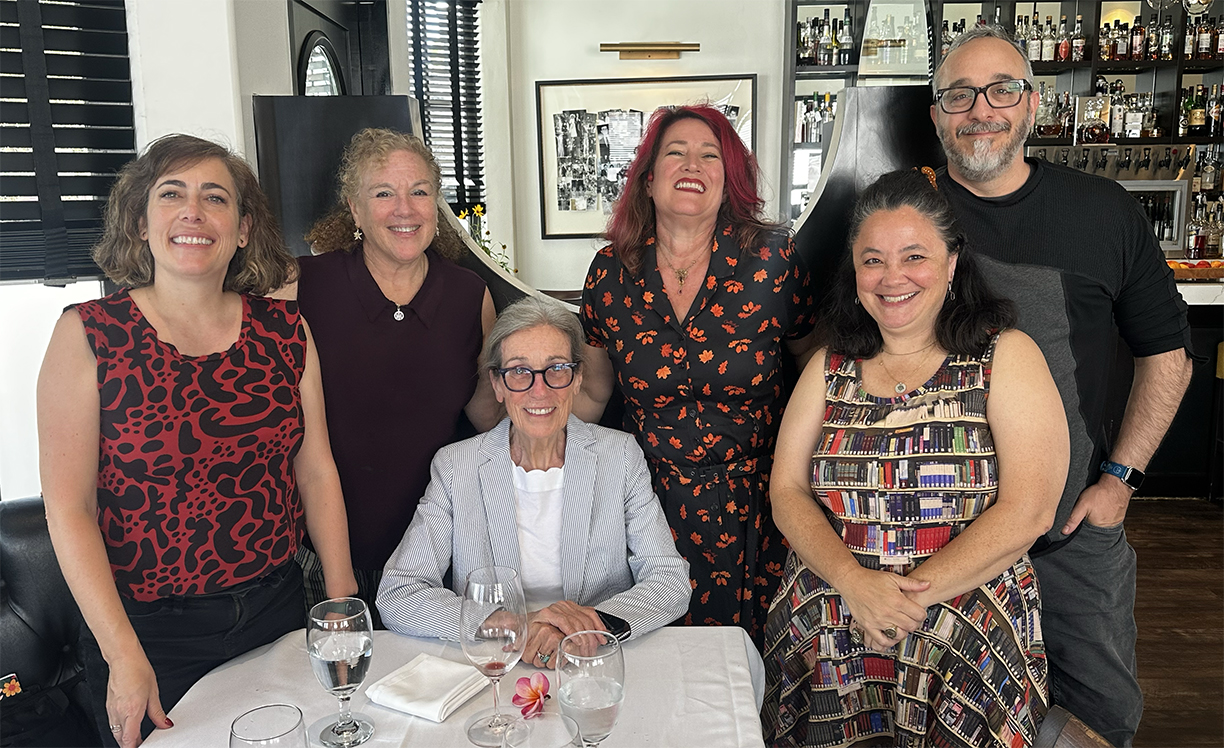
On September 22 the Connect Committee was proud to host Carol Littleton, ACE, at Marino Ristorante. Carol was joined by Jesse Averna, ACE; Liza Cardinale, ACE; Elisa Cohen, ACE, Molly Shock, ACE, and myself. The conversation was spirited, touching upon topics from freedom of speech to mid-career decisions.
Carol told us her origin story, an ‘accidental tourist’ of sorts. She was the youngest in her family in Oklahoma and was considered too young to go anywhere, but after studying French literature she got a scholarship to go to Paris. Her parents reluctantly let her go after underestimating that she would win the scholarship.
While in Europe, she was visiting a museum with a friend, when they encountered two gentlemen who looked liked Germans. When the men approached offering them wine to go with their picnic lunches which they had brought from the hostel where they were staying, Carol and her friend invited the men to join in. When they found out that they were all going to the same concert that night, they exchanged tickets, so the newly formed couples could sit together. That ‘German’ would become Carol’s future husband and artistic partner for life, John Bailey.
When John visited Carol’s Oklahoma home, he told her that he could never live there and that she should come live with him in Los Angeles. And for Carol and for film lovers, this would prove to be a most providential move.
She got a job as an ad agency assistant. It was a culture like the world of Mad Men – as a woman she got no encouragement or support from her boss. Then later helping out her husband, she taught herself how to sync dailies from a book and that’s where her foray into the editing world started. She went on to work at Film Fair, editing commercials for products like Dove soap. She learned her editing craft telling the shortest of stories and learning the power of a single frame of film.
After editing a couple of indie films, Carol talked about how Peter Benedek not only formed UTA but took Carol on and handed her this script by Lawrence Kasdan. She said it read like a novel and Kasdan told her that he wanted the touch of a female editor, in that he was more on the nose and heavy-handed and that a woman would be more suggestive and evocative for the genre he was aiming for. Kasdan told Carol that she was the only one to find the humor in the script for Body Heat. And so the storied relationship with Kasdan and Littleton was born – luckily for audiences everywhere.
Carol talked about the power of performance, reveling in William Hurt’s prowess, but also noting that a key performance that she sculpted was that of Geena Davis, a brand new actor at the time, in The Accidental Tourist. Michael Kahn, ACE, was working on Poltergeist, so Steven Spielberg was on the hunt for an editor for E.T. the Extra-Terrestrial. Carol sat in Spielberg’s office and read the script and interviewed right on the spot. She told him that E.T. being believable was key to the emotional content of the story. She thought that she might have offended him and didn’t think she got the job. To her surprise she got it.
Carol spoke of how the puppet in E.T. didn’t work at first and they had to get a mime artist to control the hands. They did a temp dub with slugs for E.T. as they were paranoid that pictures of E.T. would be leaked. Then they went out to preview with an answer print in Houston, and knew they had something special when the scene came up where Elliot threw the baseball into the shed and it rolled out back out to him to the delight of the audience. When they came back to the editing room after the preview, they only had to tighten up one scene, and that was it.
Carol experienced a lot of ‘Can the little lady do it?’ attitude buzzing around her. One of her worst experiences was on Roadie. The director kept saying to her that he was a better editor than her, riding her quite a bit. After the director showed his wife the cut, he had notes saying that his wife could cut it better. As a complete surprise to the director, she told him, “If you don’t trust me, then I shouldn’t be editing your movie.” Carol quit that day and never looked back.
Years later, Carol was celebrating the completion of E.T. with her crew at Musso and Frank’s in Hollywood. She ran into her former boss, the head of the ad agency where she got her start. He asked what she was doing. Carol said that she just finished work on a new film to be released soon called E.T. and he replied, “What did you do on it, are you an assistant?” To which she replied, “I am the editor and I’m celebrating with my crew.”
She talked about how much responsibility came with being the president of the Motion Picture Editors Guild and what she did for the state of labor. The changes that were made during her tenure were game changing – the merging of the West Coast and East Coast locals and simplifying the industry experience roster, allowing for new members and expanding the growth of the union.
After she finished her last film in 2018, she left editing to take care of her husband. She really cherished the projects she was on with her husband and we all talked about life on location.
Carol gave us some pearls of wisdom about the art of editing. She said exposition is the killer of editing. Being an avid reader helps with editing. And a technique to try (which might be impossible with the time constraints and attention deficit with today’s producers) is to screen a show once – withholding giving any notes and immediately watch the cut again. If you have the same note upon the second viewing, you might just have a valid note. The first watch is to take the story in.
Over dessert, her parting words to us were to keep editing as long as it makes you happy.
Thank you Carol for your time, care and insight. Being a part of this luncheon was a privilege and an honor.
______________________________________________________________________________________________
A Connect Committee Luncheon with Alan Heim, ACE
– Jonathan Alberts, ACE
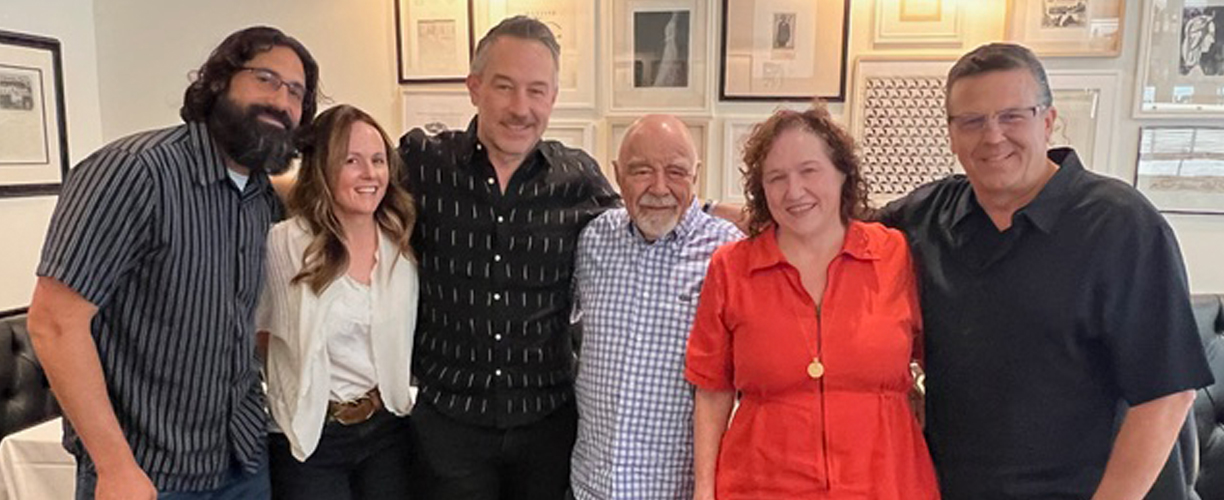
Alan Heim was the ACE Life Member honoree at a luncheon held at Marino Ristorante and sponsored by Pacific Post. Attendees included Angela Catanzaro, ACE; Emily Hsuan, ACE; Dan Rovetto, ACE; and Barry O’Brien, ACE – who were lucky to be chosen to pick Alan’s brain about his illustrious career, but also to celebrate his birthday, May 21.
Alan spoke about the high points -and occasional hurdles – of his decades-long journey in film. With a résumé that includes Network, Star 80, Lenny, All That Jazz, American History X, The Notebook, among others, Alan was refreshingly honest about both the successes and the challenges he’s faced along the way.
Naturally, Bob Fosse was a central figure in the conversation. Alan collaborated with Fosse on four films over fifteen years -a partnership he called the most valuable of his career. He spoke of Fosse with admiration, not only for his creative genius but for the way he treated his crew. “He always acknowledged people,” Alan said. “He cared about everyone.” Fosse referred to Alan as a collaborator, and it was clear their dynamic was rooted in mutual respect. During the editing of Star 80, Fosse once approached Alan with a scene idea. After cutting it together, Fosse asked, “Do you like it?” When Alan said he did, Fosse grinned and replied, “You should -it was your idea four months ago.”
He also recalled working on a film starring Sigourney Weaver and F. Murray Abraham that was never released. When he later mentioned the project to the young Weaver who he’d just met at a party, “she stiffened, froze, and walked away.
Director Sidney Lumet, known for working fast, rarely did more than a few takes. On earlier collaborations like The Seagull, Lumet would stand over Alan’s shoulder in the editing room. When they disagreed on a particular cut, Lumet said, “Let’s go with mine,” insisting, “the audience will just think it was a projectionist error.’
Alan’s career has spanned some of the most iconic films in the business, and and having the chance to hear him share his experiences directly was a privilege. What stood out was not just the work itself, but the straightforward and sincere way he’s been navigating the ups and downs of his career.